

Top 7 Things to Know About the Ethiopian Coffee Ceremony
If you love coffee, you already know Ethiopian beans sit at the top of the world. What might surprise you is that once you sit down for a cup, the Ethiopian coffee ceremony expects you to stay for two more. This guide walks you through what makes that tradition so special.
You’re drinking coffee at the source
Ethiopia is the birthplace of Arabica coffee. This ceremony isn’t staged for visitors. It is coffee culture at its origin.

Everything starts with raw green beans
The ceremony begins with unroasted beans washed and poured into a flat pan. They roast over charcoal until they crackle and darken, filling the room with a warm, smoky fragrance. Incense often burns alongside the roast, adding a soft, resinous aroma that sets the mood.
When the roasting is done, the woman preparing the coffee walks around the room, lifting the hot pan so everyone can breathe in the scent of the freshly roasted beans. Elders are invited to smell it first, a small gesture of respect that sets the tone for the ceremony.
It’s not “grab and go”
The Ethiopian coffee ceremony is slow by design. The coffee is brewed and served in three rounds called Abol, Tona, and Baraka. Each round tastes a bit lighter as the same grounds are used again, and each round carries its own meaning. Baraka means “blessing,” a gentle close to the ceremony.
You sit, talk, listen, and move through each pour without rushing. It is the complete opposite of a quick caffeine stop, and that unhurried rhythm is what makes the experience special.

The tools are as important as the coffee
A few names you’ll hear everywhere:
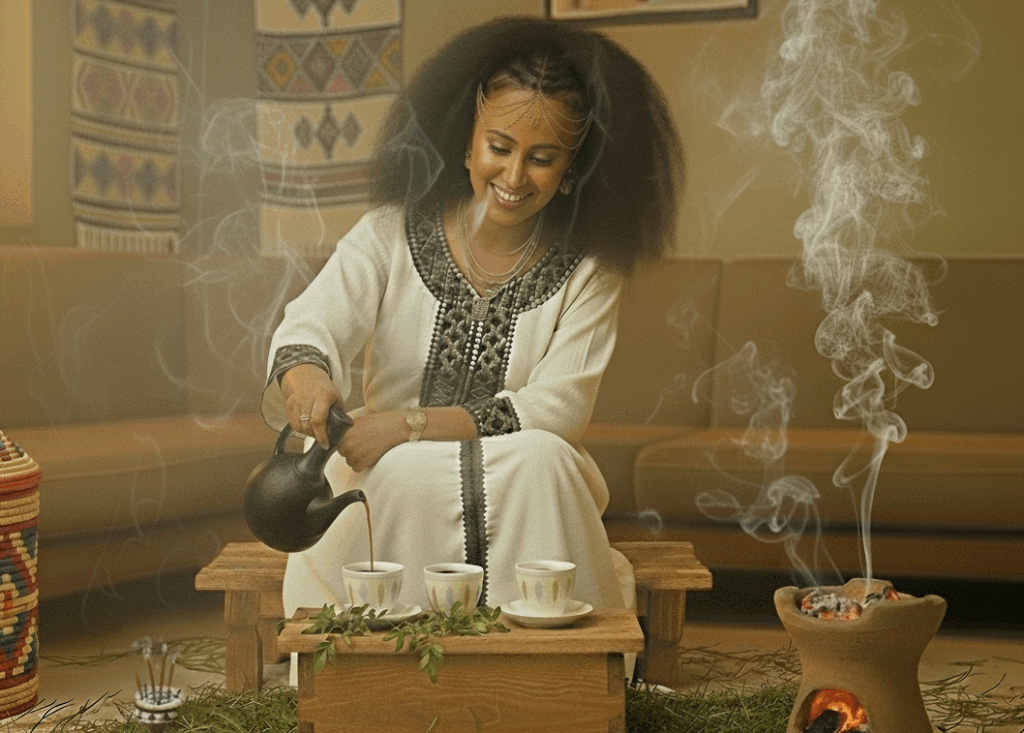
Jebena (ጀበና): a handmade clay pot with a round base and narrow spout used to brew the coffee
Cini (ሲኒ): small porcelain cups decorated with iconic floral designs
Itan (ዕጣን): the incense that fills the air
Tena Adam (ጤና አዳም): a fresh, aromatic herb sometimes added to the coffee for those who enjoy its clean, herbal flavor.
Cut grass (ሣር): often spread on the floor to make the space feel alive and welcoming
These tools set the mood long before the first cup is poured.
Women carry the ceremony
They don’t just prepare the coffee. They set the atmosphere. On holidays and important gatherings, the host often appears in a handwoven Menen dress trimmed with Tibeb. Women from regions like Tigray and Harar, may add gold forehead ornaments and bold gold or silver jewellery. That blend of tradition and elegance is what makes the ceremony unforgettable.
Being invited is a big deal
An invitation to coffee is an invitation into someone’s life. It’s a sign of trust, respect, and genuine welcome. In Ethiopian culture, sharing coffee is a way to connect, resolve tensions, or celebrate good moments.
It’s a social reset button
People talk, laugh, share stories, and slow down. The ceremony turns a simple cup of coffee into a moment of connection.
Why the Ethiopian coffee ceremony stays with you
Long after the aroma fades and the last cup is finished, the ceremony leaves an impression. It shows what coffee can be when it’s treated as a shared moment instead of a quick fix. It’s culture, care, and conversation wrapped into one ritual.