
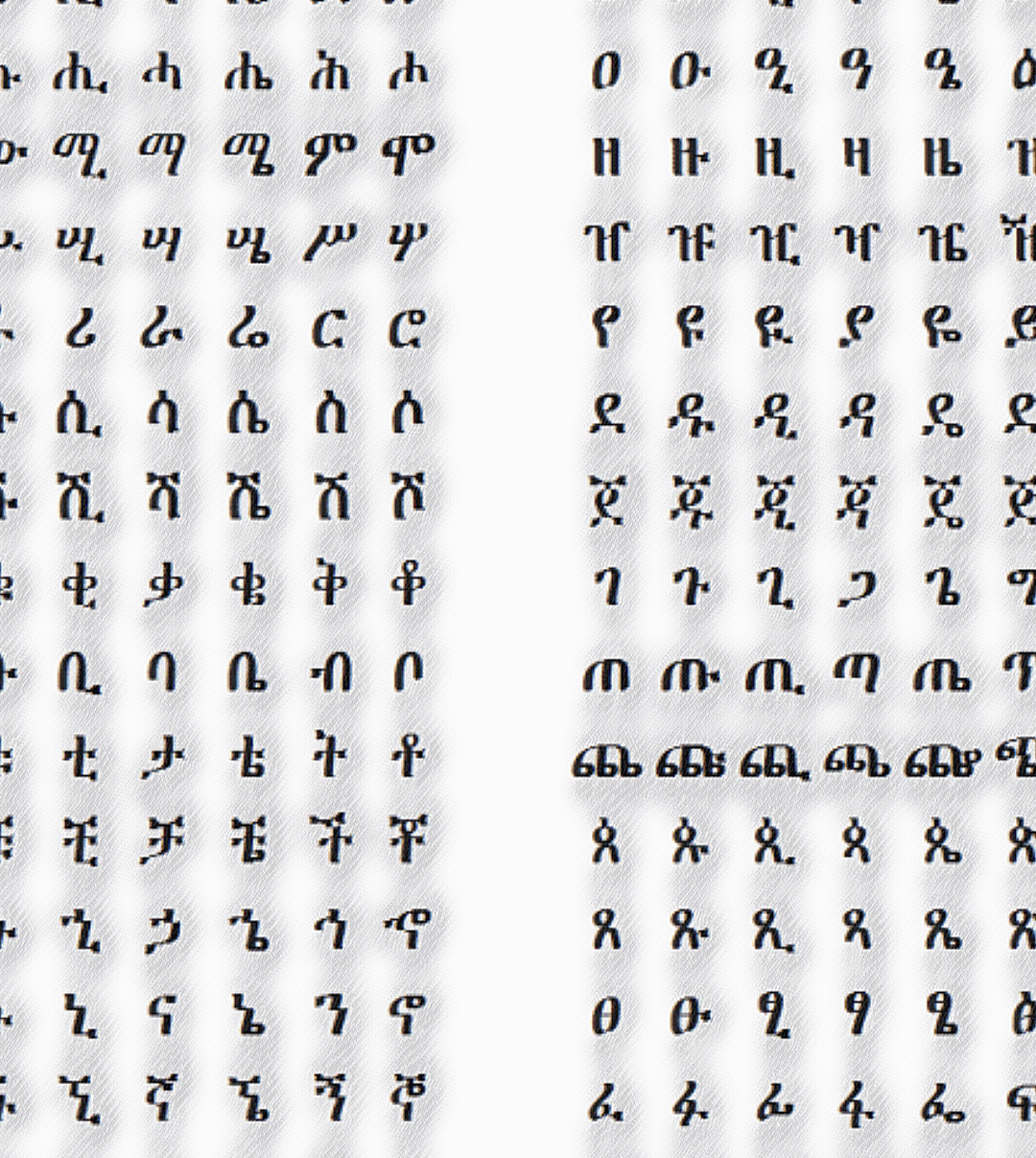
From Geʿez to Fidel, Ethiopia Forged a Script Like No Other
Most writing systems share roots. Fidel breaks that pattern. Which makes one question worth asking: how did Geʿez evolve into it?
Linguists estimate that humans have created roughly 300 to 400 writing systems across history, from ancient and extinct scripts to the ones still used today. And of the hundreds ever invented, only about thirty to thirty five remain in regular use.
Out of all those systems, only a small group of cultures still write with scripts they built themselves: China, Korea, Japan, India, the Cherokee Nation, the Vai people, and Ethiopia.
Ethiopia is home to one of the oldest living writing systems in the world, the Geʿez script. It began in the ancient Kingdom of Aksum and has been used continuously for more than two thousand years.
Most writing systems share roots, borrow from neighbours, and blend over time. Ethiopia’s script is the exception. It evolved on its own, stayed remarkably stable, and still powers multiple languages today.
Geʿez developed into a fully independent writing system, separate from its early influences, and gradually took on the form we now call Fidel, the syllabary used in Amharic, Tigrinya, and liturgical Geʿez.
As Geʿez grew as an administrative and liturgical language, readers needed a clear way to show vowels. Instead of inventing separate vowel letters like Latin or Greek, Ethiopian scribes modified each consonant to mark the vowel that followed it. One base consonant became seven shapes, each representing a different vowel. This was the key innovation that turned the script into a full syllabary.
Fidel is the modern, fully developed stage of that system.
This script is considered an independent writing system because, even though early Geʿez shows some influence from South Arabian scripts, its core structure was created in Ethiopia. Its vowel system was locally invented, and it evolved without merging with or adopting the systems around it.
That makes Fidel unique in structure, locally engineered, and historically continuous for roughly two thousand years.